Showing posts with label Microsoft Fabric. Show all posts

November 30, 2024

Secure a Microsoft Fabric data warehouse

 Data warehouse in Microsoft Fabric is a comprehensive platform for data and analytics, featuring advanced query processing and full transactional T-SQL capabilities for easy data management and analysis.

Microsoft Fabric data warehouse is a complete platform for data, analytics, and AI (Artificial Intelligence). It refers to the process of storing, organizing, and managing large volumes of structured and semi-structured data.

In a warehouse, administrators have access to a suite of technologies aimed at safeguarding sensitive information. These security measures are capable of securing or masking data from users or roles without proper authorization, ensuring data protection across both Warehouse and SQL analytics endpoints. This ensures a smooth and secure user experience, with no need for alterations to the existing applications.

Microsoft Fabric following security features allows for sophisticated security mechanism at the warehouse level:

Workspaces roles – Designed to provide different levels of access and control within the workspace. You can assign users to the various workspace roles such as Admin, Member, Contributor, and Viewer. 

Item permissions – Individual warehouses can have item permissions assigned to facilitate the sharing of the Warehouse for downstream use.

Data protection security – For more precise control, you can use T-SQL to grant specific permissions to users. Warehouse supports a range of data protection features that enable administrators to shield sensitive data from unauthorized access. This includes object-level security for database objects, column-level security for table columns, row-level security for table rows using WHERE clause filters, and dynamic data masking to obscure sensitive data like email addresses. These features ensure data protection across Warehouses and SQL analytics endpoints without necessitating changes to applications.

Dynamic data masking offers several key benefits that enhance the security and manageability of your data like the actual data remains intact and secure, while nonprivileged users only see a masked version of the data.


-- For Email

ALTER TABLE Customers

ALTER COLUMN Email ADD MASKED WITH (FUNCTION = 'email()');


-- For PhoneNumber

ALTER TABLE Customers

ALTER COLUMN PhoneNumber ADD MASKED WITH (FUNCTION = 'partial(3,"XXX-XXX-",4)');


-- For CreditCardNumber

ALTER TABLE Customers

ALTER COLUMN CreditCardNumber ADD MASKED WITH (FUNCTION = 'partial(4,"XXXX-XXXX-XXXX-",4)');

The Masked data will looks like as: 

CustomerName: John Doe

Email: j*****@contoso.com

PhoneNumber: XXX-XXX-7890

CreditCardNumber: XXXX-XXXX-XXXX-3456

As you can see, the sensitive data is hidden from the nonprivileged user, enhancing the security of your data. 


Row-level security:

This feature that provides granular control over access to rows in a table based on group membership or execution context.

For example, in an e-commerce platform, you can ensure that sellers only have access to order rows that are related to their own products. This way, each seller can manage their orders independently, while maintaining the privacy of other sellers’ order information.

Column-level security:

It provides granular control and allows you to restrict column access in order to protect sensitive data and access specific pieces of data, enhancing the overall security of your data warehouse.

Column-level security can help ensure that sensitive information is only accessible to those who are authorized to see it

November 29, 2024

A success story with Microsoft Fabric- How a FSQA Platform Transformed Data Management from Disconnected Data to Decisive Insight

On October 22, 2024, Taylor Farms initiated a voluntary recall of yellow onions linked to contamination that affected McDonald’s Quarter Pounder burgers in several states. The contamination source was traced to slivered onions previously served on the burgers based on epidemiologic and traceback data. McDonald’s responded by halting the use of recalled onions in the affected locations. While impacted food service customers were contacted directly, the event highlighted challenges in swiftly tracing contamination sources and executing recalls efficiently.


Issues Due to Disconnected Data

  1. Delayed Contamination Traceback:

    • Traceback data from suppliers like Taylor Farms is often stored in isolated systems, making it difficult to correlate batch data with epidemiologic findings.
    • Real-time insights are limited, delaying actionable steps to identify and mitigate contamination sources.
  2. Fragmented Communication:

    • Food service customers rely on separate systems to manage notifications, often resulting in communication delays.
    • Affected entities like McDonald’s must manually cross-check supplier data, leading to inefficiencies during recalls.
  3. Compliance and Reporting Challenges:

    • Regulatory compliance requires accurate documentation and reporting, which is difficult to achieve when data is spread across multiple vendors and systems.
    • Disconnected systems increase the risk of non-compliance, fines, or delays in recall execution.
  4. High Operational Costs:

    • Managing recalls with disconnected tools and fragmented data pipelines leads to higher operational costs.
    • Real-time IoT and sensor data for monitoring supply chain conditions often remain underutilized due to lack of integration.

Current Limitations in the System

  1. Fragmented Data Sources:

    • Data ingestion from diverse suppliers like Taylor Farms, manufacturers, and transporters remains siloed, delaying traceability during contamination events.
  2. Scalable Analytics Complexity:

    • Real-time IoT data ingestion and batch data processing for compliance and food traceability are handled by separate systems, leading to inefficiencies.
  3. Data Governance and Compliance Gaps:

    • Disconnected systems make tracking data lineage and ensuring compliance with food safety regulations more difficult.
    • Multitenant platforms face challenges in managing data security and ensuring proper isolation.
  4. User Experience Issues:

    • Stakeholders like compliance officers, food safety experts, and manufacturers must switch between multiple tools, slowing down the decision-making process.

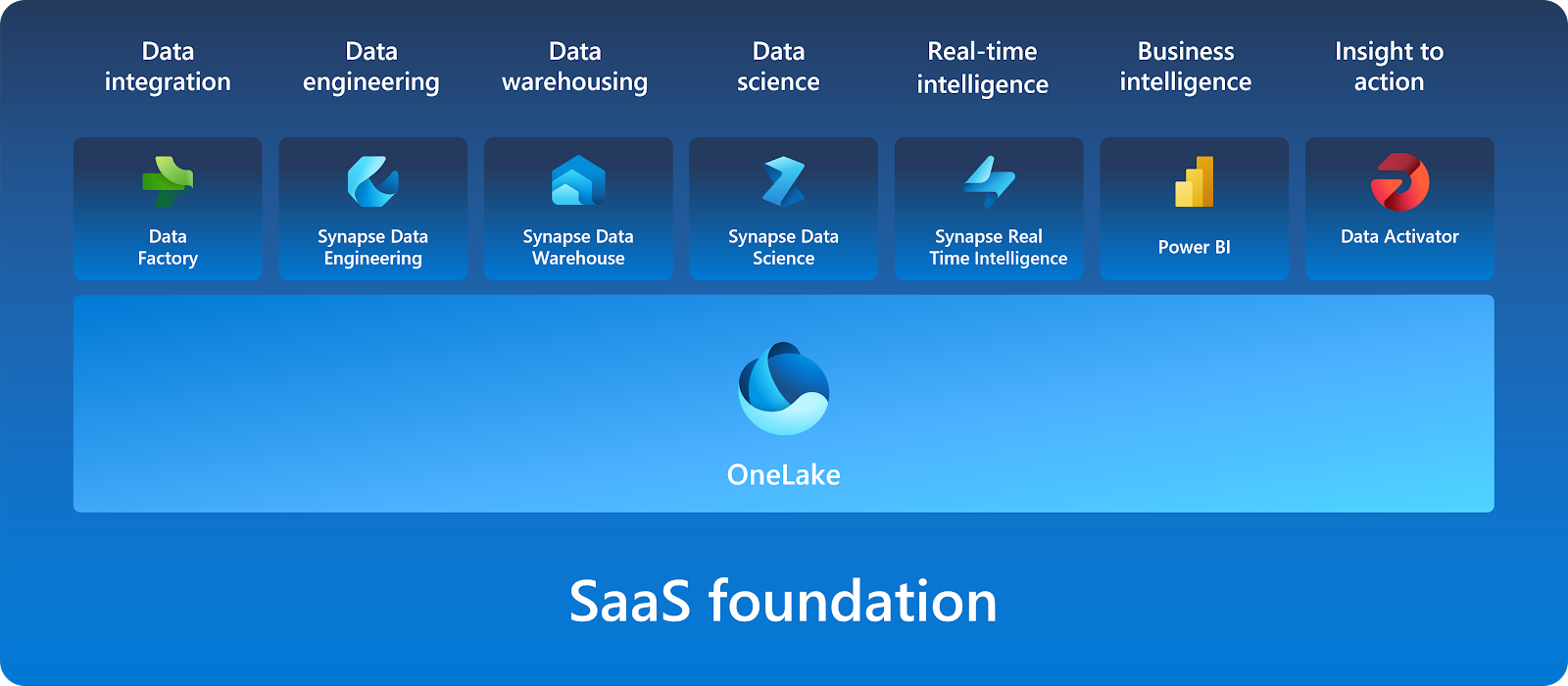
Microsoft Fabric is an end-to-end analytics platform that provides a set of integrated services that enable you to ingest, store, process, and analyze data in a single environment.

Microsoft Fabric provides tools for both data professionals and the business to collaborate on data projects and make decisions. Fabric includes the following services:

  • Data engineering
  • Data integration
  • Data warehousing
  • Real-time intelligence
  • Data science
  • Business intelligence


How Microsoft Fabric Solves the Problem

  1. Unified Data Platform for Traceability:

    • Microsoft Fabric consolidates data ingestion, storage, and analytics within a single, unified platform.
    • Data Factory enables seamless ingestion of batch data from Taylor Farms and real-time IoT sensor data from the supply chain, making traceback efficient and accurate.
  2. Real-Time Contamination Alerts:

    • Fabric’s streaming capabilities allow for instant analysis of IoT sensor data, ensuring real-time alerts when contamination risks are detected.
    • With integrated analytics, McDonald’s could have immediately linked slivered onions to the contamination source, reducing delays in recall execution.
  3. Enhanced Compliance and Reporting:

    • Fabric integrates with Microsoft Purview for robust data governance, ensuring compliance with food safety regulations by maintaining data lineage and audit trails.
    • Built-in reporting capabilities streamline documentation, making regulatory submissions more efficient and timely.
  4. Persona-Optimized Tools:

    • Fabric’s persona-specific experiences ensure that all stakeholders, from data engineers to compliance officers, have the right tools to act decisively.
    • Power BI dashboards provide intuitive visualizations for contamination tracking and recall progress.
  5. Cost-Efficient Scalability:

    • By using Microsoft’s OneLake for unified data storage, Fabric eliminates duplicate data storage, optimizing costs.
    • Fabric dynamically scales with workload demands, reducing the operational costs of managing large-scale recalls.

Key Benefits in the Context of McDonald’s Onion Recall

  • Accelerated Response Time: Unified data ingestion and real-time analytics enable faster identification of contamination sources.
  • Streamlined Communication: Fabric centralizes notifications to stakeholders, ensuring timely recall actions and minimizing risks.
  • Enhanced Traceability: Integrated batch and real-time data analysis ensures a comprehensive view of the supply chain, simplifying traceback efforts.
  • Regulatory Confidence: Robust compliance features reduce the risk of fines and enhance trust in recall processes.

By resolving issues caused by disconnected data, Microsoft Fabric transforms complex food safety operations into efficient, scalable, and decisive systems, ensuring quick and compliant responses to critical incidents like the McDonald’s onion recall.

https://avishkarm.blogspot.com/2024/11/graph-database-for-food-contamination.html


Graph Database for Food Contamination Traceability


Azure Cosmos DB's graph database capabilities can effectively be used to trace food contamination across the entire supply chain, from end users to suppliers. The Gremlin API in Azure Cosmos DB provides a way to represent the supply chain as a graph structure, making it easier to trace relationships, identify contamination sources, and model complex dependencies. 


Azure Cosmos DB is a globally distributed, multi-model database service provided by Microsoft Azure. It is designed to handle massive amounts of data with low latency and high availability. Cosmos DB supports multiple data models including document, key-value, graph, and column-family, and it offers a variety of APIs for accessing data, including SQL, MongoDB, Cassandra, Azure Table Storage, and Gremlin.


Here’s how it can be implemented for food contamination tracking:


Graph Database for Food Contamination Traceability

1. Graph Representation of the Food Supply Chain

Each entity in the supply chain (e.g., suppliers, processors, manufacturers, packaging, transporters, food retailers, and end users) can be represented as a node. The relationships or transactions between these entities (e.g., shipments, processing events, or packaging steps) are modeled as edges.

  • Nodes:
    • Supplier
    • Processor
    • Manufacturer
    • Packaging Facility
    • Transporter
    • Food Retailer (e.g., McDonald’s)
    • End User (Consumer)
  • Edges:
    • "supplies_to"
    • "processed_at"
    • "shipped_to"
    • "packaged_by"
    • "sold_to"
    • "consumed_by"

Example:

  • An edge supplies_to connects a supplier to a manufacturer.
  • An edge sold_to connects a food retailer to an end user.

2. Querying Contamination Sources Using Gremlin

Azure Cosmos DB allows you to perform graph traversal queries using the Gremlin API, which can trace the contamination path.

  • Trace Backwards:
    Start from the contaminated batch identified at the end user level or food retailer (e.g., McDonald’s) and traverse upstream through the supply chain to find the origin (e.g., supplier or processor).

g.V().has('retailer', 'name', 'McDonalds').inE('sold_to').outV().repeat(inE().outV()).until(has('node_type', 'supplier')).path()

  • Trace Forwards:
    Once the contaminated batch is identified at a specific point in the supply chain (e.g., processor), trace downstream to identify affected retailers and consumers.

g.V().has('processor', 'name', 'Taylor Farms').outE('supplies_to').inV().repeat(outE().inV()).until(has('node_type', 'retailer')).path()


3. Benefits of Using Cosmos DB for Supply Chain Tracing

  1. Real-Time Updates:
    • Azure Cosmos DB supports low-latency and real-time updates, enabling real-time contamination tracking as data changes.
  2. High Scalability:
    • The global distribution capabilities of Cosmos DB allow scaling to handle large volumes of data from multiple suppliers, transporters, and retailers.
  3. Complex Relationship Modeling:
    • Graph databases inherently excel at modeling and querying complex, interconnected relationships like supply chains.
  4. Multi-Model Integration:
    • Cosmos DB’s multi-model support allows storing graph data alongside other models (e.g., document or table storage) for additional flexibility in data representation.
  5. Regulatory Compliance and Audit Trails:
    • Cosmos DB ensures data consistency and maintains a complete history of relationships and transactions, which is critical for compliance and auditing.

Example: Food Contamination Incident

If contamination in slivered onions served at McDonald’s is detected:

  1. Forward Tracing:
    • Trace the onions from the supplier (Taylor Farms) through the processor, manufacturer, and distributor to identify which retailers and batches are affected.
  2. Backward Tracing:
    • Start at McDonald’s to identify the contaminated onions' journey through transporters, manufacturers, and suppliers.

Integration with Other Azure Services

  • IoT Hub: Integrate IoT sensor data for real-time monitoring (e.g., temperature, humidity) along the supply chain.
  • Azure Synapse Analytics: Use Synapse for advanced analytics on supply chain data stored in Cosmos DB.
  • Power BI: Visualize the graph traversal results and contamination paths for reporting and monitoring.

Key Benefits for Food Contamination Use Case

  • End-to-End Traceability: Provides complete visibility across the supply chain, from farm to fork.
  • Faster Recalls: Identifies affected batches and retail locations quickly, minimizing public health risks.
  • Data-Driven Decisions: Enables analytics-driven decisions for compliance and risk mitigation.
  • Scalability for Multitenancy: Can handle data for multiple tenants, such as McDonald’s, Taco Bell, or other food retailers.

Some of the other  use cases for Azure Cosmos DB include:

  1. High-scale web and mobile applications: Cosmos DB is optimized for handling large amounts of data with low latency, making it well-suited for high-scale web and mobile applications that require real-time data access.
  2. Internet of Things (IoT) applications: Cosmos DB can handle large volumes of streaming data, making it an ideal choice for IoT applications that generate high volumes of data.
  3. Gaming: Gaming companies can use Cosmos DB to store and manage game data such as player profiles, game statistics, and leaderboard rankings.
  4. Retail and e-commerce: Cosmos DB can help retail and e-commerce businesses manage customer data, order data, and inventory data with high performance and scalability.
  5. Social media: Social media platforms can use Cosmos DB to store and manage user data such as profiles, posts, and messages, and to deliver real-time updates to users.
  6. Overall, Azure Cosmos DB is a powerful database service that offers a variety of data models and APIs to suit different use cases, and it is well-suited for applications that require high performance, scalability, and global distribution.


Stop Memorizing SQL Part 3 : A Practical SQL Cheat Sheet for Beginners

 A Practical SQL Cheat Sheet for Beginners When learning SQL, students often struggle to remember the correct syntax during exams or practic...